Road Noise & Traffic: How to Read the Road-Noise Map Model in the Relocheck Location Report
Road noise is not a gut feeling but a location factor. It affects sleep, concentration, the quality of time spent on a balcony, and often long-term demand as well. This article explains the road-noise map model in the Relocheck Location Report, including immediate surroundings vs. neighborhood, and shows how buyers, renters, families, and professionals can use the maps objectively for location comparisons.
12.03.2026
Why Road Noise Should Be Checked Systematically When Searching for Property
In daily life, road noise often has a stronger effect than many other location criteria because it is constant. It influences sleep quality, suitability for working from home, the usability of outdoor spaces such as balconies, terraces, and gardens, and in dense urban areas even whether people keep their windows closed all the time. While some property defects can be renovated away, traffic noise often remains a location effect. It comes from the surroundings, such as road types, traffic routing, speeds, and junctions, and therefore cannot simply be fixed through renovation. That is exactly why a data-based representation is so valuable. A single viewing can be misleading. A street may seem calm on a holiday morning, while sounding much louder during weekday rush hour. Noise is also distributed very unevenly in space. Street side versus courtyard side, a few meters of distance, or a building edge can make the difference between constantly present and surprisingly quiet. This is especially relevant for families, because sleep, children, quiet phases, and safe, pleasant outdoor use matter more. For renters, the issue is everyday usability and less stress. For buyers, long-term value retention is added. Investors and agents, in turn, need an objective framework for comparison and explanation so they can differentiate several locations in a way that others can follow, without relying on vague phrases such as pretty okay or quite loud. A location report helps because it does not present noise as an opinion, but as a map. Where is the noise burden especially high in the immediate surroundings, how far does it radiate into side streets, and where are the zones that are structurally quieter?
- ✓ Never rely only on the viewing time. Noise depends on the time of day and the week, so comparison needs data plus a plausibility check.
- ✓ Assess street side and courtyard side separately. The location effect is often asymmetrical within the same building.
What the Road-Noise Map Model in the Relocheck Location Report Shows
In the Relocheck Location Report, road noise is visualized as a map model in a way that lets you recognize noise burden not just at a single point, but spatially as a pattern. The report explicitly explains that road-noise maps provide a visual representation of potential noise levels and are based on factors such as speed limits, road types, and building information. This makes it visible why certain street spaces are louder than others and how that pattern continues into adjacent areas. The structure of the display matters. The report typically shows two perspectives. Immediate surroundings: a close-up view around the location marker. This view is meant to reveal micro-effects, for example whether the street directly next to the property is the dominant noise source or whether nearby side axes, intersections, or entry and exit points matter more. Neighborhood, broader picture: a second map at a larger scale. This perspective is there to provide context. Is the location part of a generally burdened corridor, for example along a main traffic axis, or is it part of a quieter network that is only strongly burdened at a few points? This split is crucial for interpretations that are actually useful in practice. On the one hand, you can infer the immediate living experience around windows, balconies, and courtyards. On the other hand, you can assess whether the overall environment is more traffic-dominated or more like a residential-street setting. The report explicitly names this context view as an advantage: surrounding noise levels can provide a broader understanding of road noise at neighborhood or community level.
How to Interpret the Legend and Color Bands Correctly: From Very Low to Very High
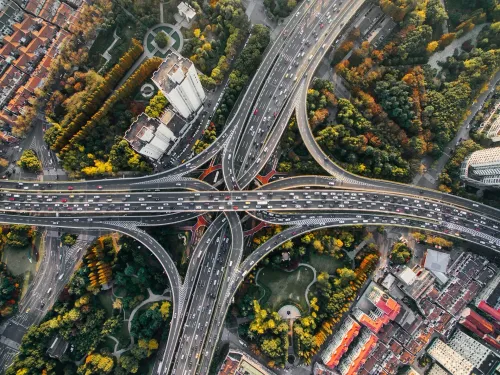
The map model works with clear legend classes to show noise burden as levels. In the report, these levels are shown as categories, from very low through low, medium, and high to very high. That sounds simple, but it is exactly the point. For comparing locations, it is often more important to know whether an object lies in a high or very high band or falls into low or very low than to focus on an apparently exact number. This is how to read the colors as decision logic. Very high or high: these areas are typically directly along heavily trafficked roads, at major intersections, in entry and exit zones, or wherever traffic is concentrated. For apartments, this often means a higher likelihood of permanently noticeable traffic noise, especially with open windows or when bedrooms face the street. Medium: these are often transition spaces, for example side streets that are not main axes but still absorb through-traffic, or zones into which noise radiates. Depending on the use case, medium can still be critical. For noise-sensitive people, street-facing bedrooms, or focused work from home, it may already be disturbing. Low or very low: these are often residential streets, rear locations, or areas screened from traffic by buildings. Here the chance is higher that outdoor spaces such as a courtyard or a balcony on the quiet side can be used well. One thing matters: the map shows spatial distribution, not your interior. Whether it is quiet indoors also depends on window quality, ventilation, room position, and floor plan. But as a location indicator, the legend is extremely practical because it gives you a clear and comparable classification, especially when you need to weigh several properties against one another quickly.
- ✓ Where the map shows high or very high burden, check specifically whether bedrooms and main living areas face the quiet side.
- ✓ In medium zones, define the use case first, such as home office or children’s room, and price in noise sensitivity realistically.
Immediate Surroundings: Understanding Micro-Noise Effects Such as Street Side, Courtyard Side, and Shielding
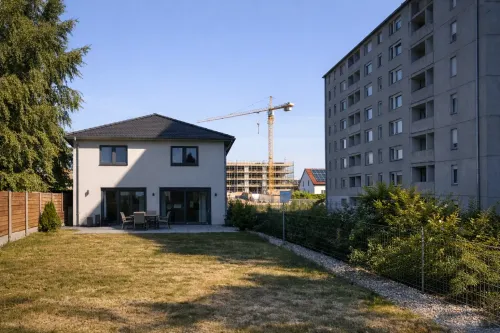
The close-up view of the immediate surroundings is usually the most important part for real living practice because this is where micro-effects become visible. Typical patterns you can identify on the map and then compare with the property itself include the following. Noise bands along the main street: if a high or very high zone runs like a band along a road, the probability is high that street-facing facades are more affected. For renters and buyers, this means the viewing should be conducted deliberately so that street-facing rooms and window behavior, open versus closed, are examined. Drop in noise levels in side streets: often the color shifts from high to medium or low after only a few meters. That is a real location argument. An apartment 30 to 60 meters around the corner can be noticeably quieter even though it is formally close to the main street. Intersections and junctions: near intersections, larger burdened areas often arise than on straight sections. This matters because not only driving noise is concentrated there, but often braking, acceleration, and higher traffic volume as well. Shielding through buildings: buildings can also cut off noise. The map helps identify such shielding zones. If low or very low suddenly appears behind a building edge, that suggests a potentially quieter courtyard or rear-facing situation. For families, this can mean that play and sleeping areas should, where possible, be placed on the quiet side. For home office use, the room where most working hours are spent should not be where the map indicates the highest burden. For investors, it is a question of lettability: whether a property is repeatedly downgraded in listings and viewings because of a noisy facade side despite a good micro-location, or whether there is a clearly quieter counterpart, such as the courtyard side, that can be justified objectively.
- ✓ Translate the map into the floor plan: which rooms face the burdened side and which face the quiet side?
- ✓ Identify nearby junctions and intersections, because burden is often more spread out there.
Neighborhood Map: Context for Everyday Life, Demand, and Perceived Quiet
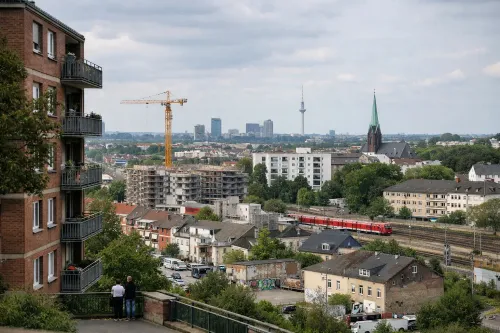
The second perspective, neighborhood as a broader picture, answers a different question. It is not how loud it is directly at the window, but what overall traffic context the area has. The report emphasizes exactly this point: the surrounding noise level provides the broader context for understanding road noise at neighborhood or community level. In practice, this means the following for interpretation. Recognize traffic axes: if several burdened bands run through the district, that is an indicator of an environment that is generally traffic-dominated. Even if the apartment is on a small side street, this can still affect how usable routes are on foot, with children, or by bicycle, as well as the general feeling of calm. Identify quiet islands: some neighborhoods have clearly defined quiet zones that are burdened only by individual corridors. Such patterns are interesting for families and noise-sensitive people because you can choose properties specifically within the quiet zones. Assess future robustness: even without drifting into speculation, the context helps you see risks more consciously. A location already sitting in a strongly burdened corridor has less buffer if traffic increases. A location in a quiet zone can appear more stable because the burden is not concentrated directly next to it. For agents and property professionals, this is a key advisory lever. You can explain transparently whether an apartment lies in a quiet network despite urban proximity or whether it lies in an area where roads act as the dominant element. That improves expectation management and reduces later disappointment.
What Traffic Means in the Model, and What You Should Check in Addition
The report makes it transparent that the road-noise map model derives potential noise levels from structural factors, explicitly including speed limits, road types, and building information. That is a major advantage because it makes locations comparable through the same method and the same representation. At the same time, it is important to understand the limit. A map model is not identical to your personal perception at every hour of the day. That is why an additional, simple plausibility check is worthwhile, not as something subjective, but as something systematic. Check different times of day: if possible, observe the surroundings briefly once during a typical peak period, in the morning or evening, and once again in the evening if sleep is important. Even 10 minutes can be enough to see whether the map feels plausible. Pay attention to windows and ventilation: an apartment can lie in a medium zone and still be good if the bedrooms face the quiet side or if the apartment is designed so that you can ventilate without opening onto the burdened street side. Identify special sources: the map model focuses on road traffic. Other sources such as delivery zones, bus acceleration at stops, cobblestones, or very busy intersections can shape local perception. The neighborhood map at least helps identify junctions as potential hotspots. A courtyard is not automatically quiet: many people assume courtyard equals quiet. That may be true, but not necessarily, for example if the courtyard reflects sound or serves as an access route. The close-up map is therefore a good starting point, but on-site comparison still makes sense. The Relocheck approach is above all a comparison tool. It reduces the risk of underestimating or overestimating a property because of a single moment and makes noise transparent as a location criterion without requiring you to be an acoustics expert.
- ✓ Do a short, systematic peak-time check once in the morning or evening to verify plausibility.
- ✓ Check the ventilation logic: can you air out the apartment without relying on the burdened side?
- ✓ Also observe non-road sources such as delivery zones, stops, intersections, and access routes.
Who Benefits Most from the Noise Map? Practical Bridges for Different Needs
To help a broad target group read the same thing from the map, it helps to translate it into typical decision questions. Families: priority goes to bedrooms, children’s rooms, and outdoor spaces. The map delivers a quick preselection. Properties in high or very high zones directly on main axes should be checked especially critically, or only considered if the floor plan is consistently oriented toward the quiet side. Renters, including people working from home: many underestimate how strongly permanent background noise affects concentration. The map helps compare locations objectively before investing time in viewings. Someone who works at home during the day should assess a medium rating differently from someone who is mostly at home in the evening. Buyers: for buyers, road noise is often a long-term value and demand factor. The neighborhood map is especially relevant here because it shows whether the property lies in a traffic-shaped corridor or in a quiet structure. That can be reflected in resale or reletting. Investors: the practical benefit lies in reducing risk. Noisy locations often lead to longer marketing periods or price and rent discounts when a quieter alternative is available in the same segment. The map model is therefore a screening instrument for identifying hidden location disadvantages early. Agents and professionals: the map supports transparent communication. Instead of arguing about subjective impressions, you can explain why a street is considered burdened and which areas are classified as quieter. This helps find the right target group for a property, for example more robust users versus households that are very sensitive to noise, and manage expectations cleanly. The common denominator remains the same: the map is not a verdict, but objective context. It shows where noise is likely and gives you a comprehensible basis for asking the right questions and comparing properties fairly.
Limits of the Model: Why Transparency Is Better Than False Precision
A serious location report is especially helpful when it not only delivers visualizations but also communicates the limits of the data clearly. The report notes that despite high quality standards, the accuracy and completeness of the information cannot be guaranteed in every case because of the amount of analyzed data, and it recommends involving professional support in important decisions. In practice, that means using the road-noise map model as an objective basis for comparison and as a risk filter, but not replacing every on-site check with it. Especially when decisions are close between two similarly strong properties, a short and systematic reality check can be decisive: time of day, window orientation, the quiet side, and the actual use of outdoor spaces. Even so, the advantage remains clear. Without a map, noise is often discovered by chance during a viewing. With a map, noise becomes a structured location criterion that is transparent, comparable, and understandable for every target group.
- ✓ Use the map as a comparison tool, not as the final truth.
- ✓ For close decisions, do a short on-site check at a critical time of day without overcomplicating it.