Spotting Noise Sources: What Property Buyers Should Watch For
Hidden noise sources are rarely obvious during a first viewing. This article shows which disturbances around properties are most often overlooked, from major traffic corridors to nightlife zones, and how buyers can avoid noise traps early with clear checks and the road-noise module in the location report.
12.03.2026
Why Noise Is So Often Underestimated in Purchase Decisions
When buying a property, many things compete for attention at the same time: price, condition, layout, energy performance, light, and neighborhood. Noise is surprisingly often treated as something to check later, and that is exactly the risk. Noise is one of those location factors that you can hardly influence after the purchase. You may be able to replace windows or sometimes re-plan the bedroom, but the main traffic corridor, rail line, or nightlife district will remain. The second reason noise is underestimated is that many viewings take place at times that are not representative. Saturday at noon is not the same as a weekday morning. One quiet day is not normal. And even if it is quiet during the viewing, nighttime conditions may be completely different. For buyers, this means that noise sources around a property need to be checked systematically before making a decision, not just by intuition. The good news is that a structured checklist can reveal many noise traps early, before they become expensive.
- ✓ Treat noise as a location factor that cannot really be fixed later, much like orientation, corridor exposure, or neighborhood structure.
- ✓ Do not treat the viewing time as the truth: a noise profile needs time windows, early, evening, and night, plus context data.
The Most Common Noise Sources Around a Desired Property and How to Recognize Them
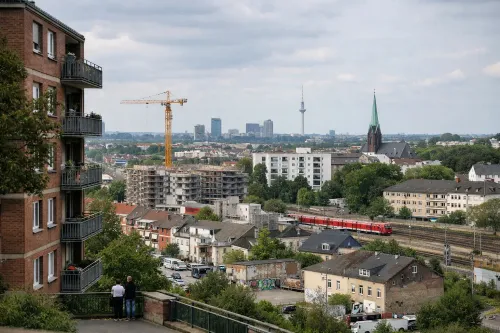
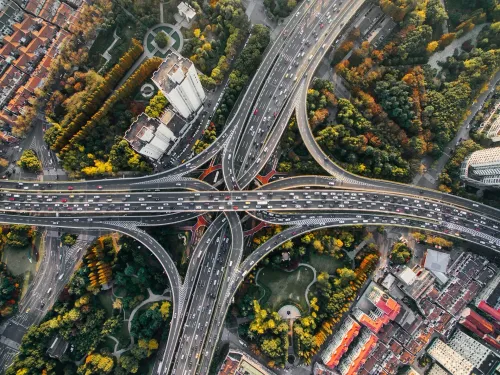
When people say noise, they often think only of cars. In reality, there are several typical sources, each with a different pattern, and that pattern is exactly what determines whether it becomes burdensome. 1) Main roads and collector corridors: they often create constant background noise plus peaks from braking and acceleration at intersections. You can recognize them not only by street names but by network logic: roads that connect larger nodes attract traffic. 2) Nodes such as intersections, roundabouts, and ramps: here noise is often more intense because driving behavior is louder than in flowing traffic. Often underestimated are turning lanes, signal phases, and bus bays. 3) Rail lines: rail noise is rarely constant, but it often comes with strong events such as passing trains, braking, or signals. For many people, this is subjectively more disturbing than a steady hum. 4) Flight paths: even when individual overflights are brief, repetition and unpredictability can create stress. Here the pattern matters more than the single peak level. 5) Nightlife districts and gastronomy: the noise does not come only from music, but also from people, doors, taxis, and pickup traffic, and it occurs exactly when people want quiet. 6) Delivery zones and commercial uses near housing: early morning deliveries, rolling containers, cooling units, and waste collection. 7) Schools, sports fields, and play areas: this is not traffic noise, but recurring peaks at fixed times. For families, that may be unproblematic. For people who prioritize quiet or work from home, it can be relevant. The key for buyers is not only whether a source exists, but how often it occurs, at what times, and how close its impact is to the property.
- ✓ Sort noise sources by pattern: continuous hum from corridors, event noise from rail or air traffic, and edge-time noise from nightlife or deliveries.
- ✓ Check the network logic: connector roads and nodes are often stronger noise drivers than the street directly in front of the building.
Plan the Viewing Properly: Time Windows, Room Orientation, and the Window Test
If you check a noise source only once, you are often checking the wrong picture. An effective viewing strategy needs only a few but targeted steps. 1) Three time windows instead of one appointment: ideally, check early in the morning between 6 and 7 a.m. for startup traffic and deliveries, in the evening between 8 and 10 p.m. for leisure traffic, return traffic, and gastronomy, and on a weekday during the day if home office or daytime rest matters. 2) Room orientation as the key question: where will the future bedroom be? Where is the balcony? A noisy corridor is much less problematic if the bedrooms face the quieter side. Conversely, even a moderate street can be massively disturbing if the bedroom faces the source directly. 3) The short window test: briefly open the window in the potential bedroom and do not ask whether it is loud, but whether ventilation is realistically possible, especially at night or in warm months. Many noise problems are not created in winter with the windows closed, but in summer. 4) The outdoor-space reality: a balcony is only a quality feature if you actually want to use it. Check whether you would really sit there in the evening or whether it would be avoided because of noise. These checks are especially important because buyers usually think long term: if noise is disturbing in everyday life, it is not just an annoyance, it also affects resale prospects and the property's value.
- ✓ Plan three time windows, early, evening, and weekday daytime, because edge times are often more decisive than midday.
- ✓ Check the bedroom side and balcony side consistently: room orientation can drastically change how noise is experienced.
- ✓ Do the window test in the bedroom: realistic ventilation is often the best indicator of later satisfaction.
Talks with Neighbors and Property Management: Ask the Right Questions Instead of Making Small Talk
An underestimated lever in any noise check is conversation, but only if you ask concrete questions. Neighbors and property management are often the best sources for recurring patterns that you will not notice during a viewing. Good questions for neighbors include: At what times is it loudest here? That focuses on time windows instead of a vague judgment. Are there regular events such as waste collection, delivery traffic, sports activity, or late-night visitors? What is it like in summer with the windows open? Which side of the building is quieter? Have there been complaints or conflicts because of noise? Good questions for the property manager or seller include: Are there structural measures against noise, such as acoustic windows or insulation? What is the orientation of the bedrooms, and is there an inner courtyard? Are there planned construction projects or traffic changes nearby? The right attitude matters too. The goal is not to catch anyone out, but to understand the location realistically. Buyers benefit when they treat noise not as a taboo subject, but as a normal part of location due diligence.
- ✓ Ask neighbors about time windows and repetitions, meaning patterns, not just whether it is loud in general.
- ✓ Ask the summer question: what is it like with the windows open? That exposes many underestimated noise problems.
Relocheck Road-Noise Module: Assess Traffic Noise Before You Even Visit
A preliminary assessment is especially valuable for noise because it makes the viewing more targeted. The road-noise module in the location report describes a map model that visualizes potential noise levels in the area and, according to the report, takes factors such as speed limits, road types, and building information into account. For buyers, the most important use is to identify noisy corridors before investing time. Here is how to interpret the module in practice. 1) Evaluate the immediate surroundings: the report explains that the noise level in the immediate environment matters for assessing effects at specific locations. That helps you examine the address itself: is it directly on a burdened road or in a quieter microlocation? 2) Include the neighborhood context: the report emphasizes that the surrounding noise level provides a broader context for understanding road noise at neighborhood or community scale. For buyers, that means asking whether the district as a whole is crossed by busy corridors or whether there are larger quiet islands. 3) Turn the map into a checking plan: the map does not replace an on-site check, but it tells you where to check, such as nodes, corridors, or transit-stop areas. That helps you avoid random appointments and test exactly the places that will matter later. Important for context: the report notes that despite quality control, the accuracy and completeness of the information cannot be guaranteed and recommends not making premature decisions and seeking additional professional support if needed. In practice, that is the right approach: use maps as structured orientation, then add targeted on-site checks.
- ✓ Use the noise map as a filter: identify corridors and nodes early and only visit locations that fit your needs.
- ✓ Use both levels: immediate surroundings for the address and the broader neighborhood logic, since both are covered in the module.
- ✓ Turn the map into a checking plan: where exactly do you need to listen, and at what times?
Decision Confidence: How to Document Noise Risks and Compare Them with Alternatives
In the end, the best protection against noise traps is a clean comparison. Buyers often visit several properties but record noise impressions unsystematically. That means they can no longer reconstruct later why property A felt quieter than property B. A simple documentation logic is: source, what is the suspected main source, such as a corridor, rail line, gastronomy, or deliveries? Time, when does it occur, early, evening, or night? Place, where is it relevant, on the bedroom side, the balcony, the entrance area, or the courtyard? Context, is it a local detail or does it shape the entire neighborhood? Compensation, is there a quiet side, an inner courtyard, shielding, or is the location fully exposed? If you record these points for each property, decisions become much clearer and you avoid letting a beautiful living room or a good kitchen cover up a structural noise problem. Precisely because many people only feel the full impact of noise in everyday life, this diligence before buying is worthwhile: it protects not only quality of life, but also the property's long-term marketability.
- ✓ For each property, document noise by source, time, place, and context so that the comparison remains reliable later.
- ✓ Check compensation: quiet side, inner courtyard, and shielding versus an exposed location are what determine whether a risk is acceptable.