Tree Cover and Air Quality: How Trees Improve the Living Climate
High tree cover in a residential area shapes the day-to-day living climate. It provides shade, can make the surroundings noticeably more pleasant on hot days, and is often associated with better air quality. This article shows how to interpret tree cover and green space in the Relocheck report using maps and indicators, with a particular focus on families, children, and older adults.
12.03.2026
Tree cover in residential areas: why it matters for health, everyday life, and location quality
The term "tree cover in residential areas" is more than a pleasant detail in the streetscape. Trees influence everyday life in several ways at once: they create shade, affect the perceived temperature in the neighborhood, and shape how willing people are to walk or let children play outside. For families and older adults in particular, these are not just comfort issues but part of daily logistics. How pleasant is the walk to daycare? Is the nearby playground still usable on hot days? Are there shaded routes to the shops or the transit stop? In location analysis, tree cover is therefore an environmental indicator. It stands in for green space that creates a higher quality of stay, and it often correlates with areas that are less heavily sealed with hard surfaces. That does not mean a green neighborhood is automatically better than an urban one, but it does mean the living climate and the usability of the surroundings can differ in objective ways. The Relocheck location report lists tree cover and green space as its own topic in the location summary and links it explicitly to the attractiveness of residential areas, especially for nature lovers and families.
How tree cover improves the living climate: shade, heat perception, and usable time outdoors
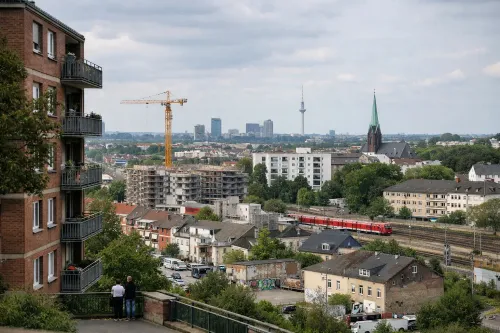
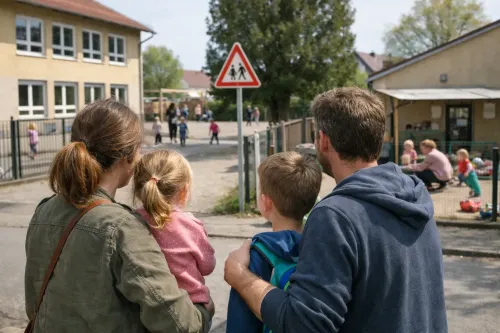
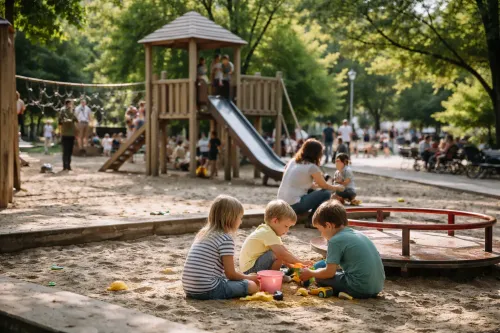
Trees influence the neighborhood mainly through shade and evapotranspiration. You notice this in practical situations that are easy to overlook during a home search: a hot afternoon on an unshaded sidewalk, a courtyard without trees, a playground without shaded islands, or a transit stop without sheltered waiting areas. In tree-lined streets, the quality of stay can be much higher because walking is less tiring and outdoor areas remain usable for longer. For families, the benefit is especially tangible: children are more likely to play outside when the surroundings do not heat up as much and when routes to daycare, school, or leisure activities are more pleasant. For older adults, the neighborhood profile can be decisive because heat waves are more burdensome and shaded, short routes make everyday life easier. One important point for interpretation is that tree cover is not a substitute for apartment features such as layout, insulation, or ventilation. It is a location feature. It describes the outdoor climate in which the property sits, and that matters for long-term residential satisfaction and location appeal.
How to read the Relocheck green-space map: spotting the density of planted areas at a glance
In the report, green space is visualized through a green-space map labeled biodiversity green areas. This map is built as a density map, showing how strongly planted areas are distributed across the region. It uses a green color scale that helps you identify areas with high or low green-space density. To interpret the visualization in a meaningful way, especially when comparing multiple locations, three points matter. First, pay attention to connected green spaces rather than isolated dots. A few small green patches may be nice, but for neighborhood climate and everyday usability, larger connected areas such as parks, waterfront zones, green corridors, or a consistently green streetscape often matter more. Second, read the map radially around the location. The key question is not only whether there is greenery somewhere, but in which directions it lies and how quickly it can be reached. This matters especially for families, because in practice usability depends heavily on distance, barriers such as major roads or rail lines, and safe walkability. Third, use the map as a comparison tool, not as a pretty image. The report emphasizes that green spaces have a significant impact on residential quality and that comparing two locations with this map is especially powerful because it turns subjective impressions such as "it feels green" into a consistent pattern.
A highly informative metric: how to interpret the minimum distance to the nearest green space
One of the most useful measures in the green-space module is the minimum distance to the nearest green area. The report explains why this distance matters: it affects the ability to exercise outdoors and, especially near parks or green areas, can support environmental benefits such as lower air pollution and cooling. For end users, the distance is an everyday indicator: the shorter it is, the more likely people are to actually use the greenery, whether for a short walk, getting children outside quickly, or a brief recovery break. For older adults, this is also a comfort and strain indicator, because short routes to shadier, more pleasant areas are often crucial in daily life. One interpretation tip is that distance alone does not tell you what kind of green space it is. That is why it always helps to combine the distance value with the map. Is it a park, a green corridor, a sports area, a waterfront zone, or a more private or enclosed green area? Only this combination turns the metric into a reliable basis for a location decision.
An important counterpoint: when lots of tree cover can also mean too much shade
A common mistake is to assume that more trees are always better. The Relocheck report explicitly adds an important caution here: very dense tree cover close to an apartment can create problematic shade, so the proximity and height of the trees should be considered as well. For buyers and renters, that leads to a clear review logic. If daylight inside the home matters a great deal to you, for example because you want a bright living room, a good home office setup, healthy houseplants, or more winter light, then heavy tree cover directly in front of the windows is not automatically a plus. It can reduce light conditions, the overall sense of brightness, and depending on the orientation also the usable hours of sunshine. If, on the other hand, protection from heat and a cooler environment are your priorities, for example for better sleep in summer or for heat-sensitive residents, that same shading can be an advantage. The right evaluation therefore comes from your priorities and from the detailed location context. Trees in the neighborhood, meaning shade on walking routes and parks nearby, are something different from tree cover directly at the building, which means shade on the windows themselves.
Land use as context: why tree cover and a green neighborhood are not the same thing
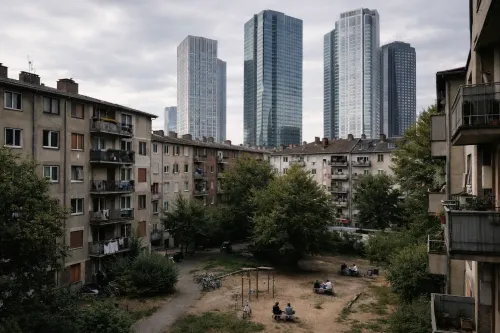
A tree-rich environment can result from very different conditions. It may be a park-oriented residential district, a low-density area with gardens, or a place dominated by rural or near-natural land. For location assessment, this context matters because it is often linked to other factors such as accessibility, infrastructure, density, and the noise profile. That is why it helps not to view green space in isolation, but together with land use and surface sealing. In practice, that means a location can look green while still offering very little usable green space within walking distance, for example when greenery mainly runs along traffic corridors. The reverse can also be true: a location may feel relatively urban but still have a very accessible park, which can make a major difference in daily life. For families and older adults, the usual question is whether greenery is safely reachable and practical for everyday use. For investors, the question is often whether the green space is a stable location advantage, such as proximity to a park, that can support demand over the long term. These are different perspectives, but both benefit from the same maps and metrics in the report.
Practical review steps for a home search: how to use the data without getting lost in it
To make tree cover and air-quality logic useful in practice, it helps to follow a simple process that works for a broad audience. Start with the green-space map. Check whether there are connected green areas around the location and whether there are green corridors that appear usable on foot. Then add the distance value to the nearest green space. Is the nearest usable green area close enough to be used realistically in daily life? With children or limited mobility, that is often a key criterion. Finally, do the shading check. If the map and your viewing suggest very heavy tree cover directly at the building, consider whether that fits your priorities for light and warmth. The report explicitly notes that very dense tree cover near the apartment can create problematic shade. This leads to a clear data-based decision: not simply "green is good," but "green is a location profile that I evaluate according to my own priorities."