Urban Climate & Heat Islands: Where Green Spaces Bring Cooling
Urban heat islands make densely built neighborhoods much warmer in summer than greener areas. This article explains in clear terms how heat islands form, why trees and parks act like a natural air conditioner, and how renters and investors can assess location quality objectively on hot days. The focus is on interpreting typical temperature and urban climate maps, and on how Relocheck visualizations for green space, tree cover, surface sealing, and land use help compare heat-prone streets with climate-resilient residential locations.
12.03.2026
What Is an Urban Heat Island, and Why Does It Affect Residential Locations So Much?
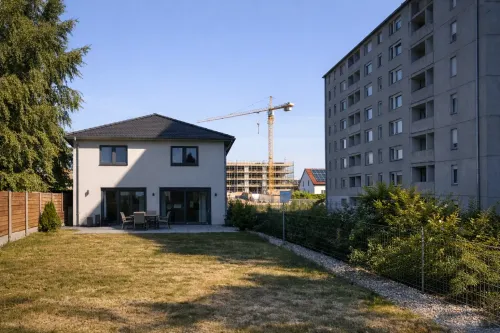
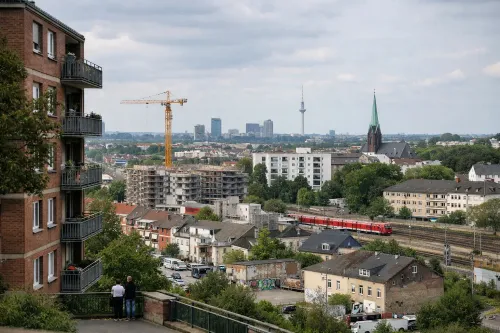
On very warm days, the city often feels like its own climate zone: asphalt shimmers, facades store heat, and nights barely cool down. That is exactly what the urban heat island phenomenon describes. It means the measurable temperature difference between densely built, heavily sealed urban areas and the surrounding countryside or especially green parts of a city. For property searches, this is not a side issue. Heat directly affects everyday livability: sleep quality, concentration when working from home, the well-being of children and older people, and, very practically, whether an apartment remains comfortable in summer without additional cooling. The more hot days and tropical nights occur, the more relevant it becomes whether a location truly cools down in the evening or whether heat gets trapped in street canyons. One thing matters: heat islands are not just a city-versus-country issue. Differences often arise block by block, between two neighborhoods, two streets, or even two sides of the same building. That is why a data-based perspective is worthwhile, because it makes micro-location and neighborhood differences visible.
Why Green Spaces Cool: Shade, Evaporation, and Fewer Heat-Storing Surfaces
Greenery does not cool magically but through clear physical mechanisms. Trees and vegetation cool in three main ways. First, through shade. Shade reduces the direct heating of the ground, facades, and windows, which lowers surface temperatures and makes streets and interiors noticeably more pleasant. Second, through evaporation, or evapotranspiration. Plants release water through their leaves, and this evaporation draws energy from the surroundings and acts like natural cooling. That is especially valuable on hot, dry days. Third, through the logic of materials and surfaces: sealed surfaces such as asphalt and concrete store large amounts of heat during the day and release it again at night. Vegetated surfaces store less heat and also allow infiltration and moisture in the soil, which supports evaporation. For residential quality, this means not only a park somewhere in the city matters, but the combination of tree cover, the distribution of green spaces, and low surface sealing, and how close these elements are to the actual residential location.
How to Read Temperature Maps Correctly: What the Colors Really Mean, and What They Do Not
Many cities publish temperature or urban climate maps, for example surface temperature maps based on satellite data or modeled heat-stress maps. To avoid drawing the wrong conclusions, three interpretation rules help. First, surface is not the same as air. Satellite maps often show the temperature of surfaces such as asphalt or roofs. Those values can be very high, while the air temperature may seem only moderately warm. For everyday residential life, both matter: surface heat drives perceived warmth in the street space and influences how strongly buildings heat up. Second, the time of day is decisive. During the day, shade and evaporation are the main levers; at night, cooling is what matters. Densely built, sealed neighborhoods are often much more uncomfortable at night because stored heat is released only slowly. Third, maps show patterns, not guarantees. A red area is not a verdict on one specific apartment. Insulation, floor level, orientation, shading, and ventilation options can strongly change indoor reality. That is why comparison is the useful approach: which location is significantly more heat-prone than the alternatives, and why? This is exactly where complementary location indicators help: green spaces, tree density, surface sealing, and land use explain why an area stands out on a temperature map.
The Relocheck Green Space Map: Interpreting Density, Distribution, and Proximity as a Heat Proxy
The green space map in the Relocheck report visualizes the density of vegetated areas on a green color scale. For heat islands, this map is a strong proxy signal because it shows where shade and evaporation potential is concentrated, and where it is missing. You can read the map in a practical way: darker, greener zones typically indicate higher green density. On hot days, these areas are often more comfortable, especially when they form larger connected spaces such as parks, green corridors, or tree-lined routes. Lighter or green-poor zones suggest little vegetation, which means a higher risk that streets and the surrounding area will heat up strongly. Comparing multiple addresses is particularly useful: if two apartments are similarly priced, a significantly greener environment can be a real comfort and long-term advantage. What matters is not just a lot of greenery somewhere in the district, but concrete proximity and spatial structure. A large park that exists but is not easily reachable helps less in everyday life than several nearby green spaces. That is why Relocheck complements the map with metrics such as the minimum distance to the nearest green space and the amount of green space in the surroundings. For heat-related questions, these values matter because they make the difference between greenery being visible and greenery being close enough to be usable and effective.
Surface Sealing: The Underestimated Amplifier of Heat, and Why It Affects Residential Quality
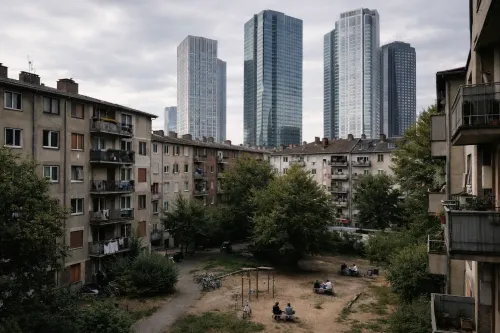
Surface sealing means, in simple terms, how much area is covered with impermeable materials such as asphalt or concrete. High sealing amplifies heat because such surfaces store warmth and at the same time reduce the water cycle and evaporation. In the Relocheck report, surface sealing is prepared as its own map and metric. For apartment seekers, this is valuable for two reasons. First, as a heat signal: heavily sealed areas are often warmer in summer and cool down more poorly at night. Second, as a signal about the surroundings: high sealing often goes together with lower stay quality, fewer cool walking routes, and an overall harsher environment. When interpreting it, a realistic view helps: sealing is not a moral flaw but a risk indicator. A central city location can still be attractive despite high sealing if the apartment itself is well protected, for example through shading, good ventilation, or a suitable orientation. But when comparing alternatives, the level of sealing is a solid criterion for classifying heat stress in the street space and the local microclimate. One more point matters: the report notes that dense nearby buildings and sealing can also create shade effects. Shade can relieve conditions during the day, but it can also encourage heat traps in narrow streets if air exchange is lacking. In practice, this means surface sealing should always be read together with greenery and building structure.
Understanding Land Use: Why a Residential Area Is Not Automatically Climate-Resilient
The land use map classifies areas by use categories such as residential structures, transport surfaces, commercial areas, agriculture, or water bodies. For urban climate analysis, this is useful because different uses create typical heat patterns. One example is discontinuous urban fabric, which typically mixes buildings, transport networks, and vegetated surfaces. This can vary greatly, from pleasantly green and permeable to strongly car- and asphalt-dominated. Commercial and industrial areas are often sealed over large surfaces and offer little shade, which can make them heat hotspots. Water bodies or waterfront areas can have a local dampening effect. For buyers and investors, this creates clear added value: land use explains what dynamics to expect around the property. If the surroundings contain a lot of transport and commercial uses, the probability is higher that heat stress, noise, and hard surfaces will dominate. If the property is instead located in a land-use mix with a high share of greenery, smaller blocks, and permeable surfaces, the microclimate and stay quality are often better. This means the map is not a simple good-or-bad label, but a context tool. It helps you justify temperature maps and personal impressions from a viewing in a logical way.
Climate Resilience as a Location Criterion: What Renters Feel Today and Investors Need to Price In Long Term
For renters, heat is above all a quality-of-life issue: sleep, family life, ability to work, and physical well-being. Anyone who has lived in a hot apartment knows that just a few degrees can dramatically change everyday life. For investors, heat is also a risk issue: locations that are regularly perceived as uncomfortable in summer may find it harder to maintain stable demand, especially among target groups that are more sensitive, such as families, older people, and health-conscious households. At the same time, objective evidence about location quality is becoming more important because more people actively want to avoid heat-related housing problems. The Relocheck report also includes climate change forecast visualizations, such as expected temperature and precipitation changes over coming decades. Even though such charts do not predict a specific apartment, they provide the strategic frame: if temperatures tend to rise, the role of shade, greenery, and surface sealing becomes more important in location comparisons. A practical rule follows from this: the more a location already stands out today because of sealing and low green density, the more important it becomes to consider indoor resilience, such as shading, orientation, ventilation, and insulation standard, as well as neighborhood development, including greening programs, depaving, and new parks.
A Practical Decision Logic: How to Compare Two Residential Locations for Heat Suitability
If you are comparing two or more properties, a clear sequence helps turn maps and metrics into a reliable decision. Start with the green space map: is the address in a green-dense environment or in a green-poor zone? Then check the minimum distance to the nearest green space and the total amount of green space. That answers whether cooling potential is close and usable in everyday life or exists more on paper. Next, read the surface sealing map: does the surrounding area contain many heavily sealed surfaces? If so, expect stronger heating and weaker nighttime cooling, and during the viewing check deliberately how the apartment itself handles this, including floor level, window areas, orientation, cross-ventilation, and shading. The land use map adds plausibility: does the pattern of use fit the expected microclimate? A lot of traffic or commercial use very nearby is a warning signal, while water, green corridors, and mixed, green residential structures are more relieving. This creates an objective and easy-to-communicate location assessment, without overreliance on gut feeling and without the common trap of judging a property only on a mild viewing day.