Healthy Living: How Location Factors Affect Children
Children are especially sensitive to environmental influences. Traffic noise, missing green space, heat islands, or poor lighting conditions measurably affect sleep, concentration, and well-being. This article explains which location factors parents, as well as renters, buyers, agents, and investors, should assess objectively, and how to read Relocheck visualizations for road noise, green space, and land use to compare healthy living environments systematically.
12.03.2026
Why Healthy Living Is a Location Issue, Not Just an Apartment Detail
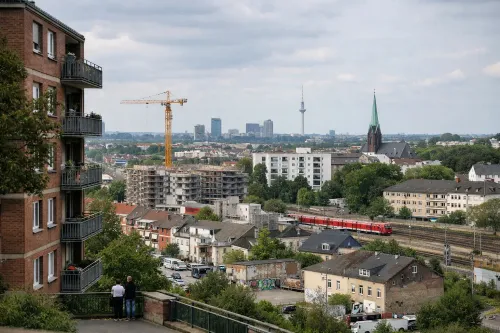
When parents think about healthy living, indoor issues often come first: air quality, mold, and materials. But the immediate surroundings are at least just as influential. Children spend a great deal of time at home, sleep more than adults, and depend more strongly in their development on whether influences such as noise, light, and outdoor space are suitable. Healthy living therefore does not begin only behind the apartment door, but already in the neighborhood. How loud is it really, including at night? Is there green space within walking distance that allows movement and recovery? Does sealed ground create heat in summer? And is the environment designed in a way that later allows children to become more independent through safe routes and usable open space? Data-based location analyses help answer these questions without relying on isolated impressions. During viewings, a street can seem quiet by chance, or a park can feel close even though daily life later forces different routes.
Noise and Children: What Research and Everyday Practice Show Together
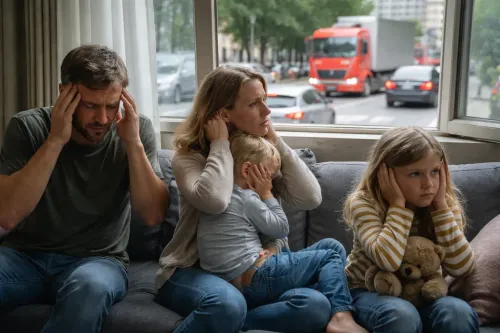
Permanent environmental noise is not merely a comfort issue. Studies and guidelines show that traffic noise can disturb sleep and intensify stress reactions, and that in children learning and concentration performance can be affected as well. For parents, that means a quiet location is not a luxury, but a form of prevention. Nighttime peaks, recurring events such as early traffic or deliveries, and the question of whether there is a quieter side within the apartment, for example the courtyard instead of the street, are especially relevant. One important point is that noise is not all the same. Steady background noise is often perceived differently from impulsive noise such as revving engines, horns, or heavy vehicles. In assessing a location, the average value is therefore not the only interesting metric. It also matters whether nearby main roads, intersections, or entry points act as hotspots.
How to Read the Relocheck Road-Noise Map Model: What the Visualization Really Says
The road-noise module in the report uses a map model that visually represents potential noise levels across an area. Such maps typically rely on factors such as speed limits, road types, and building information. Their main advantage is that you do not just see loud or quiet, but spatial patterns. In practice, read the map like this. First, read patterns instead of point values. Look for continuous noisy corridors along heavily trafficked roads. A single loud section can matter less than a whole belt shaping the neighborhood. Second, pay attention to transitions. If the map becomes clearly quieter just a few meters behind a main road, a parallel side street may already be much better even though it is in the same district. Third, consider buildings as shielding. Dense development can block noise, but it can also reflect it into courtyards. The map provides hints about where shielding is plausible, for example behind building bars, and where noise is more likely to pass through open axes. Fourth, think in terms of family routines. Do not check only the overall surroundings, but typical children’s places: the bedroom side, courtyard or play area, the route to school or daycare, and the nearest park. If the route to school runs daily along a noise corridor, that is a different type of burden than a loud section somewhere farther away. For agents and investors, the same logic is useful with a different focus: noise is a clear location factor that can affect demand, target-group fit, and long-term lettability.
Green Space and Children: More Than Nice, but Functional for Development and Recovery
Green spaces work on several levels. They create incentives for movement, reduce stress, encourage social contact through outdoor meeting points, and can improve the microclimate. Reviews often link green exposure in children and adolescents with benefits for well-being and development. For families, one thing is decisive: green space has to work in daily life. One large park somewhere else is less valuable than several usable green spaces within walking distance, especially if children are later meant to move around independently. In the report, green space is therefore treated not only as quantity, but also through proximity. The minimum distance to the nearest green space is a strong indicator of spontaneous use, such as going outside briefly, moving around after school, or getting fresh air in the evening. An additional plus point that is often underestimated is that greenery and tree cover can make the environment more tolerable on hot days. For children who spend a lot of time outside in summer, that is a real health and comfort factor.
How to Read the Green-Space Map and Minimum Distance: Density, Distribution, and Daily Life
The green-space map in the report visualizes the density of planted areas using a green color scale. This is ideal for comparing two locations quickly without looking only at individual parks. Practical reading rules are straightforward. First, distinguish density from islands. An evenly green environment is often more useful in daily life than a district that is mostly gray with only a few strong green islands. Second, treat the minimum distance as a measure of spontaneity. If the nearest green space is only a few minutes away, it will be used more often in family life. If reaching it becomes a planned trip, some of its effect is lost. Third, think about usability. Not every green area is equally usable, for example a steep slope, private green spaces, or allotment gardens. The map is a starting point, so combine it with land use and what you see on site. Fourth, do not forget shade. The report notes that very high tree cover in the immediate vicinity can also create problematic shading. For healthy living, that means green is good, but it is still worth checking whether living rooms and play areas receive enough daylight despite the greenery. This creates a realistic picture: healthy green space that is accessible, usable, and positive for climate, instead of green somewhere else.
Land Use and Soil Sealing: When Neighborhoods Become Hard Heat and Stress Zones
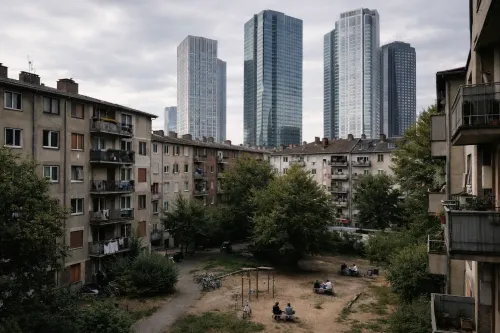
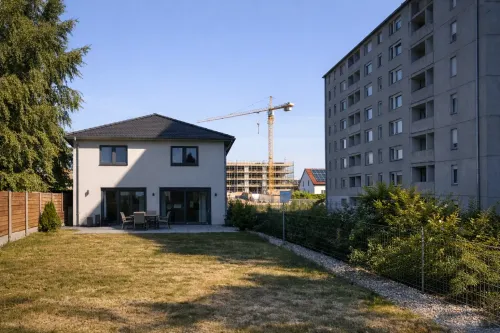
Besides green space, the type of land use matters. Sealed surfaces such as concrete and asphalt make the ground impermeable and influence water balance, microclimate, and the quality of staying outdoors. The report describes soil sealing as a location factor and explains that heavy sealing can negatively affect the environment and quality of life in a neighborhood. For families, the logic is very concrete. A lot of asphalt nearby often means less natural cooling, fewer soft places to spend time, and stronger summer burden. Heavily sealed areas also often come with more traffic, more parking surfaces, and more barriers on children’s routes. This is relevant for investors as well because climate-resilient locations tend to remain more stable in demand, especially in cities where summer heat is increasing. The land-use map complements this by showing which uses dominate, for example discontinuous urban fabric, water bodies, agricultural patterns, or commercial units. For healthy living, this is not just a label, but context. Commercial or heavily traffic-oriented uses often increase noise and burden risks, while mixed residential structures with plenty of greenery tend to offer more quality of stay.
Daylight and Sleep: Why Light Is a Quiet Health Factor, and How Green Space Has Two Sides
Daylight influences the day-night rhythm and therefore indirectly affects sleep quality and well-being. Studies examine light and daylight exposure in children in connection with sleep parameters. For everyday life, one simple insight is enough: a stable rhythm needs reliable light-dark signals. For assessing a location, this does not mean you need complicated measurements. It means you should pay attention to whether the surroundings, such as buildings, tree canopies, or narrow street canyons, strongly reduce daylight inside the home. Green space can be double-edged here. It cools and calms, but with very dense tree cover it can also create shading. If you assess healthy living holistically, the interaction is decisive. A location can be quiet and green, yet still be unfavorable if children’s rooms remain permanently dark. Conversely, a bright location can be burdensome if it lies on a noisy traffic axis. Data helps recognize these trade-offs early.
Quick Check for Parents: How to Compare Two Addresses for Healthy Living
When comparing two residential locations, a fixed framework helps so you do not have to start over at every viewing. First, check the road-noise map. Are there noisy corridors in the immediate surroundings, and how quickly does the area shift into quieter zones? Second, walk the children’s places: the sleeping side, courtyard or play area, and school route. Do these fit the quieter areas on the map? Third, use the green-space map to assess density and distribution nearby, not just individual parks. Use the minimum distance to the nearest green space as an everyday-life indicator. Fourth, assess land use and soil sealing. Is the environment heavily paved, with parking lots, broad streets, and few green strips? That often points to heat and stress burden. Fifth, test daylight in daily life. Does the living space, especially children’s rooms, feel bright enough during the day? Is there shade from trees or buildings that feels permanently heavy? With this logic, you address several target groups at once: parents find a more supportive environment, renters reduce the risk of a poor rental choice, buyers protect quality of life and resale value, agents structure their advice, and investors improve target-group fit and lettability.