Sunny Balcony or North Side: Which Apartment Orientation Is Ideal?
Is south-facing always better? This article compares the pros and cons of south, north, east, and west orientations, from sunlight hours and room brightness to summer heat and shading. You will learn which direction fits your daily life, budget, and living style, and how a shadow map, monthly maps, and orientation tables can help you check quantitatively how much light an apartment really gets.
12.03.2026
Why Orientation Matters So Much: The Sun Moves and Light Windows Move with It
At the core of the question "sunny balcony or north side" are time windows. Daylight is not simply there. Depending on the orientation, it arrives at different times of day and with different intensity. The key principle is simple: the sun rises in the east, moves across the south, and sets in the west. As a result, building facades receive very different amounts of light over the course of the day. At the same time, shadows form on the opposite side, and those shadows change as the sun moves. In addition, the angle and height of the sun shift over the year, which means the light conditions change significantly by season. For renters and buyers, this means the ideal orientation is not the objectively best one, but the one whose light window fits your daily life and works reliably in the months that matter to you. Anyone who defines that clearly from the start can compare apartments much more fairly.
- ✓ Define your light window: do you want morning light for breakfast or home office, midday light for the living room, or evening sun for the balcony after work or school?
- ✓ Think seasonally: the winter reality, low sun angle and long shadows, often determines long-term satisfaction.
South Side and South-Facing Balcony: Many Sun Hours with Typical Side Effects
A south-facing side is often seen as the classic favorite because it usually has strong potential for direct sunlight. That can positively affect room brightness, plant growth, and the subjective living atmosphere. Typical advantages are plenty of direct light during relevant hours of the day, depending on surrounding buildings and floor level, a warmer feeling in the colder season when sun enters the living space, and often attractive daytime use of a balcony. The typical disadvantages are often underestimated. Summer heat can become a real issue. A south-facing balcony can become very hot, especially if there is little shading from trees, buildings, or awnings. Living quality then depends on whether sun protection, ventilation, and room layout can compensate. Glare and harsh light contrast can also be a problem. Direct sun is not always pleasant, for example during screen work or when rooms heat up strongly throughout the day. And south is not always really south in practice. A taller neighboring building or a slope can shorten the most important light window. That is why south should not be treated as a label, but as a hypothesis to test: how many hours of direct sun are actually possible, and when?
- ✓ For south-facing apartments, always also check summer comfort: heat build-up, shading options, cross ventilation, and room layout.
- ✓ Only count south as a real advantage if there is no permanent shading from the surroundings such as buildings or terrain.
North Side: Cooler, Calmer, Often More Even, but with Less Direct Sun
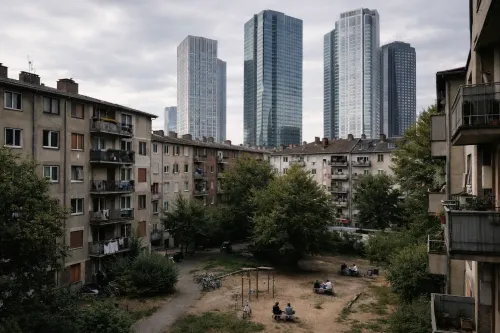
North-facing apartments are often dismissed too quickly as bad. In reality, depending on lifestyle, they can be a very good fit. Typical advantages are cooler indoor rooms in summer, often less overheating, and more even indirect light with less harsh sun and glare, which can be pleasant for screen work and quiet workspaces. For certain uses such as a studio or home office, this more constant light can even be an advantage. The typical disadvantages are also clear. There is usually less direct sunlight, especially in the winter months. The report explicitly notes that around the winter solstice, when days are shortest and shadows are long in the morning and afternoon, north-facing buildings may receive significantly less direct sunlight. In dense development, north-facing units can additionally suffer from canyon effects, where tall buildings block sky light and inner courtyards become darker. So north is not automatically bad, but it demands more care. The key question is not north yes or no, but how bright it really is, and whether that is enough for your rooms and your daily routine.
- ✓ Check north-facing apartments especially critically in winter: direct light window, sky light, and whether the rooms face the courtyard or the street.
- ✓ If home office matters, north can work well, but only if enough sky light actually arrives through window size and the surrounding context.
East vs. West: Morning Light or Evening Sun, What Fits Your Daily Life?
East- and west-facing apartments are often everyday optimizers because their light windows align with typical daily rhythms. East-facing orientation usually means morning light, which is attractive for early risers, breakfast areas, and children's rooms that feel bright at the start of the day. In the afternoon, direct sun is often reduced, which can feel more comfortable in summer. West-facing orientation usually means afternoon and evening light, which matters for many households because that is when they are home after work or school. At the same time, west can lead to noticeable heat build-up late in the day during warm periods. The report also points to seasonal patterns. In months with more balanced daylight, such as spring, east and west orientations can receive more direct sunlight and shadows are distributed more evenly. In summer, the sun stands higher, which often gives south- and west-facing buildings more direct radiation. For the decision, this means east and west are rarely simply better or worse. They are a match question. Anyone who needs light in the morning will love east. Anyone who wants balcony time in the evening will prefer west. And anyone sensitive to heat should check west-facing apartments especially carefully in high summer.
- ✓ Match orientation to your daily routine: east for morning routines, west for after-work and evening use, south for strong midday exposure.
- ✓ Check west-facing apartments in summer, because late heat build-up can affect both balcony use and sleep comfort.
Why "South Is Always Better" Is Often Wrong in Practice: Shading from the Surroundings
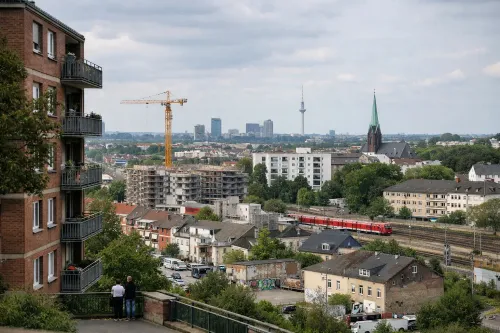
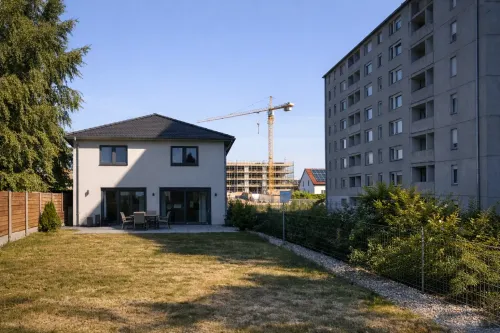
The biggest mistake when choosing an orientation is to look only at the cardinal direction and ignore the surroundings. The report describes exactly this dynamic: the length and position of shadows can change throughout the day, and they are also influenced by neighboring buildings or other obstacles in the environment. The shadow analysis explicitly includes both neighboring buildings and the influence of mountain shadows. That explains the typical surprises: a south-facing balcony but permanent afternoon shade because a tall building stands opposite; a west-facing apartment with little evening sun because a slope or building row raises the horizon; or a north-facing apartment that is still bright because it has a wide open view of the sky. The consequence is clear: orientation is only the starting point. What really matters is whether the sun is geometrically visible at all and when. That is exactly why shading visualizations are so helpful.
- ✓ Always assess the surroundings too: neighboring building height, distance, street canyons, slopes, and mountain shadows.
- ✓ With apparently strong orientations such as south or west, pay special attention to blockers that hit exactly your relevant use periods.
Understanding the Shadow Map: The Heatmap from Blue to White as a Fast Reality Check
The Relocheck module for sunlight hours and shading uses a shadow map that displays the number of daylight hours as a heatmap. The color scale runs from blue to white, with white marking the highest amount of light. This makes it possible to see very quickly which parts of the property and surroundings tend to receive the most light and which areas are more shaded. To use the heatmap for orientation decisions, do not look only at the apartment point itself, but at the broader pattern. Is the property in a broadly bright zone or at the edge of a shadow zone? Pay special attention to transitions from bright to dark. These edges are risk zones because small differences in floor level, street side, or courtyard position can lead to noticeable differences in light. Also think in terms of usable spaces: the balcony, living room windows, or children's rooms, not just the address as a whole. The important limitation is that the map shows structural light and shadow patterns. It includes neighboring buildings and mountain shadows, but it does not include variables such as cloud cover and tree cover, which can affect the actual amount of sunlight received. For a clean decision, this is ideal: the map gives you the objective geometry, and the on-site impression adds the real conditions.
- ✓ Read the heatmap as a pattern: broadly bright means robust light potential, while strongly fragmented patterns depend more on micro-location.
- ✓ Check cloud cover and trees separately: the map explains the geometry, not every real daily condition.
Monthly Maps and the Orientation Table: Turning Orientation into Measurable Data Instead of Feeling
An orientation can feel excellent in summer and disappoint in winter, or the reverse. The report addresses exactly this. Because the angle and height of the sun change over the year and daylight varies from month to month, separate maps are created for every month. In addition, daylight hours are broken down in a table by cardinal direction, north, south, east, and west. In practical terms, the monthly maps answer the question: how do light and shadow change over the course of the year? That is crucial if you want winter brightness or want to avoid summer heat. The table answers: which facade gets how much daylight and when? This makes it possible to compare orientations quantitatively. That is especially helpful because you no longer depend on a single viewing that may happen to take place on a sunny or cloudy day. Instead, you can compare systematically which apartment provides the better light windows in the months and times of day that matter to you.
- ✓ Compare at least two months: one winter month, which is usually the critical case, and one summer month for heat and maximum light.
- ✓ Use the table to simulate daily life: someone who is home in the evening weighs west differently from someone with a strong morning routine.
Sun Paths in Horizon View: The Cleanest Test for Whether Direct Sun Is Really Possible
When the question becomes very concrete, namely whether the apartment really gets direct sun or only diffuse light, the sun-position analysis in horizon view becomes especially useful. The report describes the logic like this: the terrain horizon is shown in light gray and neighboring buildings in dark gray. Sun paths are color-coded through the year, including red and green between the winter and summer solstice and blue around the start of spring. What matters most is the line style. If the sun path lies above the buildings, direct sunlight is possible and the line is shown as continuous. If the sun path is blocked by terrain or buildings and lies below them, it is shown as a dotted line. For orientation, that means a south-facing apartment may theoretically have a lot of sun, but if the relevant paths are dotted during the winter half of the year, the important light windows are blocked. A north-facing apartment can still function despite less direct sun if the horizon view shows a lot of sky light and at least some direct exposure. East and west can vary strongly depending on blockers such as buildings or slopes, and the horizon view makes those blockers visible. This turns cardinal direction into a testable statement about real light possibilities.
- ✓ Continuous means direct sun is possible, dotted means blocked by buildings or terrain, so check the relevant times of day specifically.
- ✓ For purchase decisions, take the horizon view especially seriously: the surroundings may change, but the geometry often shapes the property for the long term.
Which Orientation Is "Ideal"? A Simple Decision Logic for Different Lifestyles
Instead of searching for the best orientation in general, it is more useful to decide based on fitting profiles. For families, a bright usable living and dining zone and light in children's rooms often matter most. West can be attractive for afternoons, east for morning routines, while summer heat can become a bigger issue for sleep comfort. For renters, flexibility often matters more. Anyone staying only a short time may focus more on present comfort, such as balcony light, than on long-term changes. For buyers, long-term perspective matters more. Seasonal light windows and shading from the surroundings, including possible later densification in the neighborhood, should therefore be weighted more strongly. For investors and agents, rentability often depends on everyday usability. Many tenants react sensitively to apartments that are too dark or too hot. A data-based light comparison can help classify both risk and potential more clearly instead of relying only on subjective impressions. In the end, the ideal orientation is the one that delivers stable enough light during your critical time windows, both times of day and times of year, while keeping comfort problems such as overheating and glare manageable.
- ✓ Start with lifestyle, then orientation: when you are actually at home is often more important than what is seen as the classic best orientation.
- ✓ Define the critical months, often winter, and prioritize the critical rooms such as the living room, home office, or children's room.
Practical Check During Viewings: Combine Data and On-Site Impressions Sensibly
Even with very good visualizations, one step remains important: checking the situation on site. A pragmatic approach looks like this. First, pre-sort based on the data and eliminate candidates with clearly unfavorable patterns, such as permanent shading during critical months. Second, schedule the viewing at relevant times whenever possible. If evening sun matters, try to view later in the afternoon. If morning light matters, try to visit in the morning. Third, look outward. Is there a tall building on the relevant sun-facing side? Are there large trees close to the window? Does the horizon feel high because of slopes or tight development? Fourth, check the interior effect. Room depth, window size, and layout determine how the available light actually feels. This creates a robust decision process: orientation is not just claimed, but supported with evidence about real light windows.
- ✓ Choose the viewing time to match your real use period, morning or evening, not just your calendar availability.
- ✓ Always check interior space and surroundings together: even a good orientation helps little if blockers sit directly in the relevant light window.