Green Space at Your Doorstep: Recreational Value and Recovery Potential of a Location
The recreational value of a residential location is often created not inside the apartment, but right outside it: parks, playgrounds, and green corridors within walking distance change how easily recovery fits into everyday life. This article shows how to assess green spaces around an address objectively using the green-space map and metrics from the Relocheck report, and what families as well as nature-oriented renters and buyers should pay attention to when interpreting the visualizations.
12.03.2026
Residential Recreational Value: Why “Everyday Recovery” Is a Location Factor
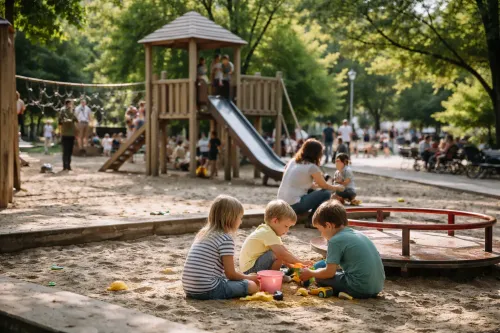
Whether a location works well in everyday life is often revealed by a simple question: how quickly can I step outside without much effort and reach greenery, a playground, a running route, or a quiet place to breathe? Green spaces within walking distance act like a leisure shortcut. For families, this means children can play outside more often because the route is short and spontaneous time windows, before dinner or between appointments, are enough. For adults, it means jogging, taking a walk, having a picnic, or simply clearing your head becomes more likely when the destination does not have to be planned first. In the Relocheck report, leisure is explicitly described as part of an ideal location profile: leisure options should be easily accessible and support different kinds of activity. At the same time, the report emphasizes that the location report can help both renters and buyers make informed decisions because location quality is directly linked to quality of life.
Which Green Spaces Count, and What “Right Outside the Door” Means in Practice
Not every green area automatically provides recovery value. For searching for a place to live, three types are especially relevant. First: parks and larger green spaces. They offer quality of stay, paths, often seating, and frequently play areas. Second: playgrounds and small open spaces close to the home. These are particularly valuable for families because they need to be reachable quickly if they are to be used in everyday life. Third: green corridors, linear green spaces such as riverside paths, planted corridors, promenades, or route networks. They are ideal for movement, walking or strolling, because they offer routes rather than just points. In this context, right outside the door is less a fixed distance in meters and more a question of everyday probability: the less time, fewer barriers, and less planning required, the more often a green space will actually be used. That is exactly why it makes sense to treat green space not just as a feeling, but as a comparable structure around an address.
The Most Important Visualization: How to Read the Green-Space Map Without Being Misled
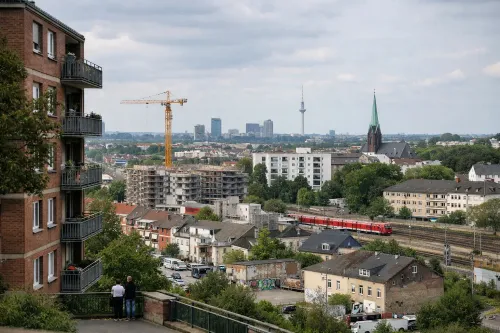
In the Relocheck green-space module, the green-space map is the central visualization for a quick overview. The report describes it as a map that visualizes the density of vegetated areas in a region. It uses a green color scale and helps identify areas with high or low green-space density. To read the map in a way that genuinely helps evaluate recreational value, focus on patterns rather than isolated patches. A few small green dots may look nice, but for everyday recovery, connected green spaces or green corridors are often more important. Read the map radially around the address. In practice, recreational value depends on direction: is the greenery on the right side of the address, without a major road in between? Are there several options in different directions? Think in terms of routes instead of straight-line distance. A map shows distribution, but not automatically comfortable accessibility. That is why it makes sense to always read the map together with distance metrics and a short reality check, crossings, barriers, and safe routes. The report explicitly stresses the comparison aspect: comparing two apartments using green-space maps is a very powerful tool because green areas have a significant impact on residential quality.
The Metric That Makes Recreational Value “Measurable”: Minimum Distance to the Nearest Green Space
One of the most practical metrics in the green-space module is the minimum distance to the nearest green area. The report explains its value very directly: distance matters because it determines the opportunity for outdoor sporting activity. It also notes that homes closer to parks or green areas can offer more opportunities for physical activity, while environmental benefits such as lower air pollution and cooling are mentioned as additional context. For families, this is easy to translate: if the nearest usable green space is very close, the likelihood rises that children will spend time outside regularly, including spontaneously. If the distance is greater, green space becomes more of a weekend destination than part of everyday life. For renters and buyers, one framing point matters: distance is a starting signal, not a final verdict. It tells you how low the threshold is, not how good the green area actually is. That is why distance should always be read together with the map, structure, and a short check of usability, access, crossings, and the type of green space.
Not Just Proximity: “Amount of Green Space” and Why Large, Usable Green Areas Feel Different
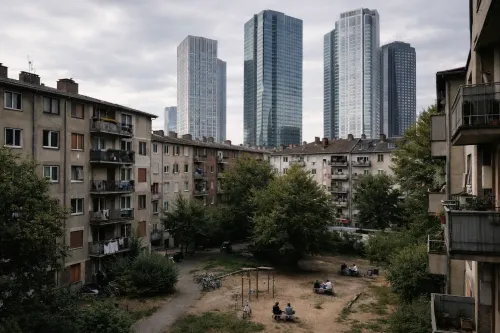
Alongside distance, the report also names the amount of green space as a factor because it can influence the attractiveness of the surroundings. In practice, this means two locations can both be close to a park and still function very differently. A small pocket park may be enough for a short break, but longer play sessions, jogging routes, or picnics often require larger spaces. More green area in the surroundings also increases the likelihood that there are several options, park, playground, and green corridor, so that leisure does not depend on a single place. For interpreting this when looking for housing, a simple logic helps: if the distance is short and the map shows large or connected green areas, recreational value is often high. If the distance is short but greenery is highly fragmented, it is worth taking a closer look: which areas are actually usable? If the distance is greater, a large amount of green space in the wider surroundings can still be attractive, but more as planned leisure than as spontaneous everyday recovery.
Typical Misreadings: Barriers, Shade, and Why “Green” Does Not Automatically Mean Restful
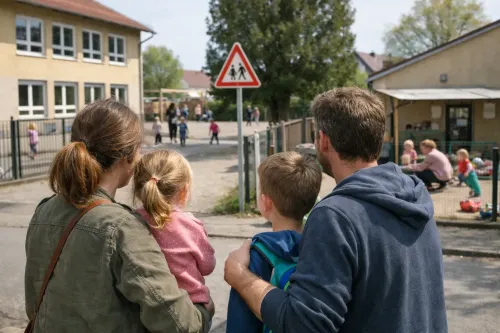
To keep green-space data from creating false expectations, it helps to know three typical pitfalls. First, barriers: a green space may look close on the map, but major roads, rail lines, or missing crossings can make it difficult to reach in practice, especially with a stroller or small children. A short reality check is decisive here. Second, shade from heavy tree cover: the report points out that very high tree cover close to an apartment can create problematic shade and that both the proximity and height of trees should be considered. This is a classic trade-off: shade is pleasant in summer, but it can also reduce daylight indoors. Third, green is not the same as quiet: parks can be lively on weekends, playgrounds can bring noise, and green corridors can run along traffic axes. Green-space data is very good at answering the question of recreational value, but the question of calm or noise is a separate location aspect and should be assessed separately.
How to Use the Green-Space Module in Practice: A Comparison Logic for Families, Renters, and Buyers
To turn there is a park nearby into a reliable decision, a standardized comparison logic helps, and it works across different target groups. Step 1: read the map. Check whether there are connected green spaces or green corridors and in which directions they lie. The map is designed to make density and distribution visible quickly through a green color scale. Step 2: check distance. Use the minimum distance to the nearest green area as a threshold: the shorter it is, the more likely spontaneous use becomes. Step 3: assess usability. Is it a park, playground, or green corridor? Are there safe routes, crossings, and places to stay? Step 4: set priorities. Families often prioritize play and movement areas at short distance, nature-oriented renters may prioritize walking and running options, and buyers additionally think about long-term fit with the neighborhood profile. This keeps the comparison fair: you apply the same steps to several addresses instead of judging each location only by the impression from the viewing.
- ✓ Check the green-space map: identify connected green areas and green corridors around the location.
- ✓ Check distance: interpret the minimum distance to the nearest green space as an everyday threshold.
- ✓ Clarify the type of green space: park, playground, green corridor, which one fits your actual use?
- ✓ Check barriers: safe crossings, route quality, stroller suitability, and child suitability.
- ✓ Keep the light-versus-shade trade-off in mind: dense tree cover can also create shade.